.jpg)
Indian Embroidery Styles: Zardosi, Kantha, Shisha
- ishaanvi5
- Dec 3, 2021
- 2 min read
1. Zardosi / Zar-dauzi
Zardosi, which translates to gold weaving, has been a part of Indian and Middle-eastern tradition since much before the birth of christ. Originally practiced solely using gold and silver thread, and sometimes with gems and pearls, Zardosi was considered a luxury and a status symbol for royalty. Besides clothing such as salwar kameez , Zardosi adorned royal tents and flags, scabbards, wall hangings and accessories of regal horses and elephants. The motifs in Zardosi work are nature-centric; including flora, fauna and animals. During the era of industrialisation, zardosi lost its value, however it has been reclaimed and celebrated since Indian independence. Today, zardosi is most popular among bridal fashion.
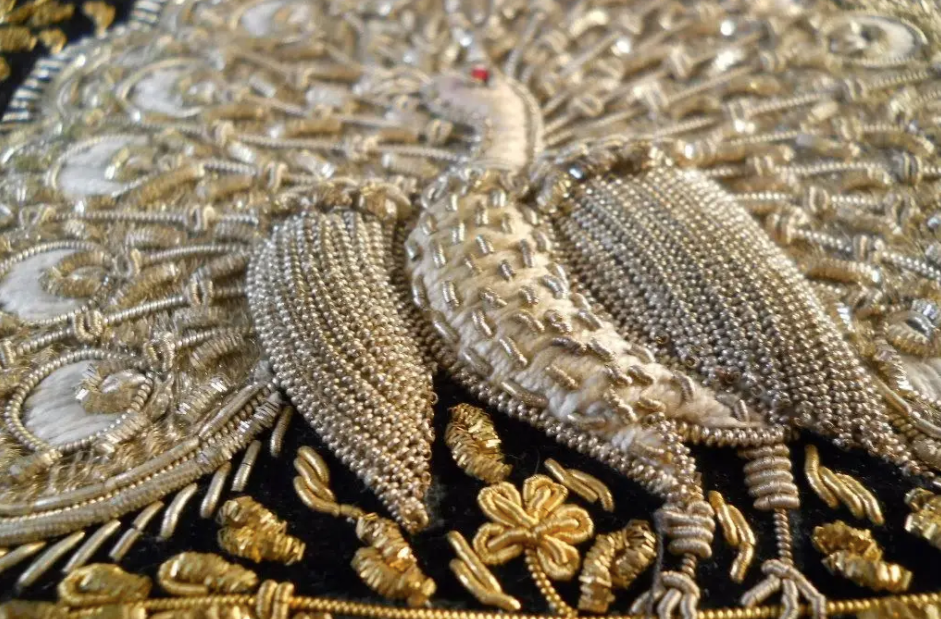
Image courtesy: https://www.weddingwire.in/wedding-tips/zardosi-work--c3511
2. Kantha
In stark contrast to the regality of Zardosi, Kantha was practiced by rural Bengali women on rags of spare cloth (the Sanskrit word 'kontha' translates to rags). While Zardosi was more a symbol of opulence, Kantha symbolised family, becoming heirlooms that would be passed down and worked on through the generations in a family. Used primarily to revive and extend the lifeline of cloth, kantha was practices on old cotton saris, dhotis, kurtis and lungis. Kanthas narrated folk-tales and mythological epics, revealed beliefs and religious practices, and conveyed the lives of the rural women. Some of the common motifs include sun, moon, wheel, swastik, trees and lotuses. One of the oldest embroidery styles to originate in India, Kantha can be traced back to earlier than 1500 BCE. There have been many historical period where Kantha nearly disappeared. First in the early 1800s, however Protima Devi (daughter of Nobel laureate Rabindranath Tagore) revived it. Again, in the mid 1900s during the partition, it dissipated, but reappeared as a highly appreciated artform.

3. Shisha / Sheesha (mirror work)
Shisha (derived from 'shisheh' which is Persian for glass) is a decorative embroidery form that involves embedded reflective material sewn into the cloth. Shisha is believed to have originated in the 1600s, where beetle wings and mica were used. Like Zardosi, Shisha is believed to have Mughal roots, and was used to embellish items such as sarees, dresses, skirts, bags, cushion covers, bedspreads and wall hangings. The embroidery style experienced a transition from being a woman's artform to being mass-produced in the twentieth century using (unfortunately) plastic discs. It also also said that Marco Polo (Italian merchant and traveler) was a great admirer, advocate and purchaser of Shisha work. Now, it is mostly practiced in Gujarat on festive clothing such as chaniya cholis, with mostly circular reflective patterns.

Image courtesy: https://www.fabricgateway.com/topic/shisha
If this interested you, check out my blog post titled- Embroidery styles from around the world: Brazil, Japan, Hungary
Sources / further reading


Comments